By Makani Christensen
One of my earliest childhood memories is visiting Dole Plantation in Wahiawa with my grandfather. He was a World War II veteran and a member of the Underwater Demolition Teams, the predecessors of today’s Navy SEALs. He took his grandchildren everywhere, from Pearl Harbor and the submarine museum to the pineapple fields of Dole Plantation.
I was eight years old when we pulled up to a small roadside fruit stand. There, a friendly Filipino woman served us freshly squeezed pineapple juice from a five gallon igloo container. I still remember the sweetness of that juice, the excitement of the visit, and the simple pleasure of sharing the experience with my grandfather.
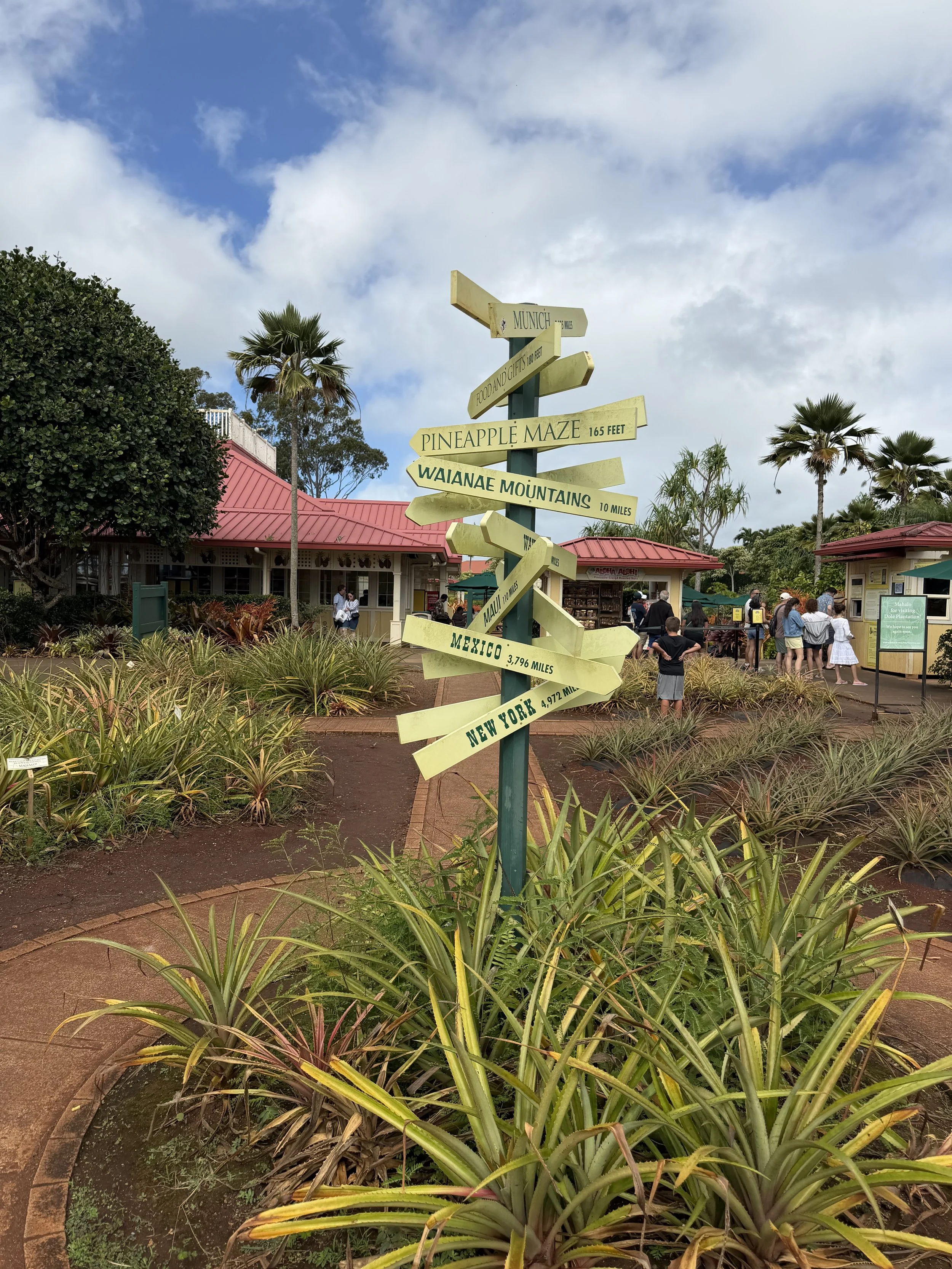
A decade later, that little fruit stand had disappeared. In its place stood a visitor center dedicated to everything pineapple, complete with daily pineapple-cutting demonstrations and a Guinness World Records maze. What had once been a modest roadside stop was becoming one of Hawaii’s most recognizable tourist attractions.
The transformation of Dole Plantation reflects a much larger story about Hawaii’s agricultural history.
James D. Dole founded the Hawaiian Pineapple Company in 1901 with just a few acres of land. Over the following decades, the company expanded into one of the world’s leading pineapple producers, with major operations in Wahiawa and a cannery near Honolulu Harbor, where my great-grandfather and other members of our family worked.
During the summer harvest, the company operated a train that traveled around the farm, transporting workers and freshly harvested pineapples from the fields. That train became part of the plantation’s history and eventually inspired the Pineapple Express, a popular attraction that takes visitors through the plantation grounds while introducing them to Hawaii’s pineapple-growing heritage.
Dole pineapple became a staple of Hawaii’s agricultural economy and helped establish the islands as a major producer of tropical fruit. Over time, the plantation evolved from a working agricultural operation into a destination where visitors could experience a small part of that history.
Today, Dole Plantation continues to be one of Hawaii’s well-known attractions, drawing visitors from around the world. The once-humble fruit stand has become a tourist destination along the road to Oahu’s North Shore.
For me, however, Dole Plantation represents something more personal.
Just as my grandfather introduced me to the plantation in 1988, I now have the opportunity to share that same sense of discovery with visitors from around the world.
In 2008, I founded Keawe Adventures, a company offering small-group and private tours throughout Oahu. Since then, I have had the privilege of sharing Hawaii’s rich history, culture, and natural beauty with thousands of guests.
Dole Plantation remains one of the places where I can connect my childhood memories with the experiences I share today. What began as a simple visit with my grandfather has become part of a much larger journey, one that allows me to introduce others to the places, people, and stories that shaped my understanding of Hawaii.
Whenever I return, I am reminded of that little fruit stand, the woman who served us pineapple juice, and my grandfather standing beside me.
The plantation may have changed dramatically over the decades, but the memories remain.
And perhaps that is what makes a place like Dole Plantation special. Beyond the attractions, the train rides, and the pineapple fields, it is a place where Hawaii’s agricultural past meets the present, and where one generation can pass its memories and experiences on to the next.
For visitors, it may simply be another stop on their journey around Oahu.
For me, it is a connection to my grandfather, my family, and a small piece of Hawaii’s history that I have been fortunate enough to share with others